Introduction
The logistics sector is undergoing a significant transformation driven by technological innovation, changing customer expectations, and increasing global supply chain complexity. In 2025, organizations are focusing more than ever on improving operational efficiency, strengthening resilience, and adopting smarter logistics solutions.
As businesses navigate an increasingly interconnected global environment, the ability to adapt to emerging trends has become a critical factor for long-term success.
In this article, we explore five key trends shaping the logistics sector in 2025 and how they are influencing the future of supply chain management.
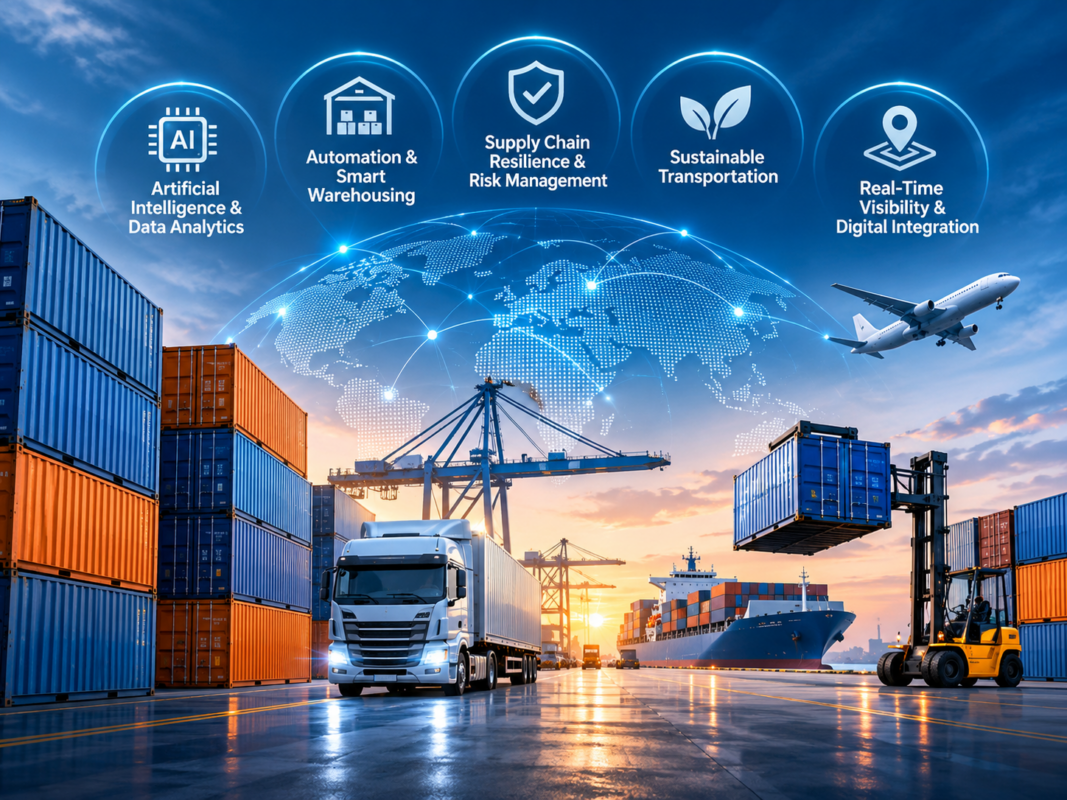
1. Artificial Intelligence and Data-Driven Logistics
Artificial intelligence (AI) is becoming an important tool in modern logistics operations. Organizations are increasingly using data-driven technologies to improve demand forecasting, optimize transportation routes, and enhance inventory management.
AI-powered solutions can help identify inefficiencies, anticipate potential disruptions, and support more informed decision-making.
By integrating advanced analytics into logistics processes, businesses can improve planning accuracy, reduce operational costs, and increase overall efficiency.
2. Automation and Smart Warehousing
Automation continues to reshape warehouse operations and logistics infrastructure. Automated storage systems, robotics, and intelligent warehouse management solutions are helping organizations streamline repetitive tasks and improve productivity.
Smart warehousing enables better inventory control, faster order processing, and more efficient resource utilization.
As operational requirements become more complex, automation offers opportunities to improve consistency, scalability, and performance across logistics networks.
3. Supply Chain Resilience and Risk Management
Global supply chains face a wide range of challenges, including geopolitical uncertainty, transportation disruptions, and changing market conditions.
In response, organizations are placing greater emphasis on supply chain resilience. Diversifying suppliers, improving contingency planning, and strengthening risk management capabilities are becoming essential strategic priorities.
A resilient logistics structure allows organizations to respond more effectively to unexpected challenges while maintaining operational continuity.
4. Sustainable and Efficient Transportation
Sustainability is increasingly influencing logistics strategies. Organizations are exploring ways to reduce environmental impact while maintaining cost efficiency and service quality.
Key initiatives include optimizing transportation routes, improving vehicle utilization, reducing unnecessary fuel consumption, and adopting alternative transportation technologies.
Sustainable logistics is not only an environmental consideration. It can also contribute to improved operational performance and long-term business value.
5. Real-Time Visibility and Digital Integration
Visibility across the supply chain has become a major priority for logistics organizations. Digital platforms, tracking technologies, and integrated management systems provide greater insight into transportation activities, inventory levels, and operational performance.
Real-time information enables organizations to identify delays, coordinate resources, and respond to changing conditions more effectively.
Digital integration also improves communication between suppliers, logistics providers, and customers, supporting more transparent and coordinated operations.
The Strategic Importance of Logistics Transformation
These trends demonstrate that the future of logistics is not defined by technology alone. Successful transformation requires a combination of strategic planning, operational expertise, process optimization, and effective implementation.
Organizations must evaluate their existing capabilities, identify areas for improvement, and develop practical strategies aligned with their business objectives.
A structured transformation approach can help businesses improve efficiency, strengthen resilience, and create sustainable competitive advantages.
How MAK Ai Supports Logistics Transformation
At MAK Ai Consultancy & Advisory, we support organizations in addressing complex logistics challenges through strategic advisory, operational excellence, process optimization, and project management.
Our approach combines sector-specific knowledge with practical operational experience to help organizations identify opportunities, improve performance, and implement effective solutions.
By focusing on measurable outcomes and sustainable improvement, we help businesses navigate the evolving logistics landscape with confidence.
Conclusion
The logistics sector in 2025 is shaped by artificial intelligence, automation, resilience, sustainability, and digital visibility. These trends are creating new opportunities for organizations to improve their operations and adapt to an increasingly dynamic business environment.
Companies that embrace strategic transformation and continuous improvement will be better positioned to respond to future challenges and achieve long-term success.
MAK Ai Consultancy & Advisory — Strategic Insight. Operational Excellence. Sustainable Results.